For many of us, the immersive worlds and thrilling gameplay of PC titles are best experienced with a good old-fashioned game controller. While keyboard and mouse have their place, the tactile feedback and intuitive motion of a gamepad can elevate your gaming, especially for action, sports, or racing genres. Fortunately, Steam, the undisputed titan of PC gaming platforms, offers incredibly robust support for a vast array of gamepads, allowing you to easily integrate your preferred controller on Steam and unlock a world of personalized control. Whether you’re a seasoned gamer or just starting, getting your controller set up on Steam is a game-changer, and we at Vntut are here to guide you through every step, ensuring a smooth and optimized gaming experience.
Understanding Steam Input: Your Gaming Control Center
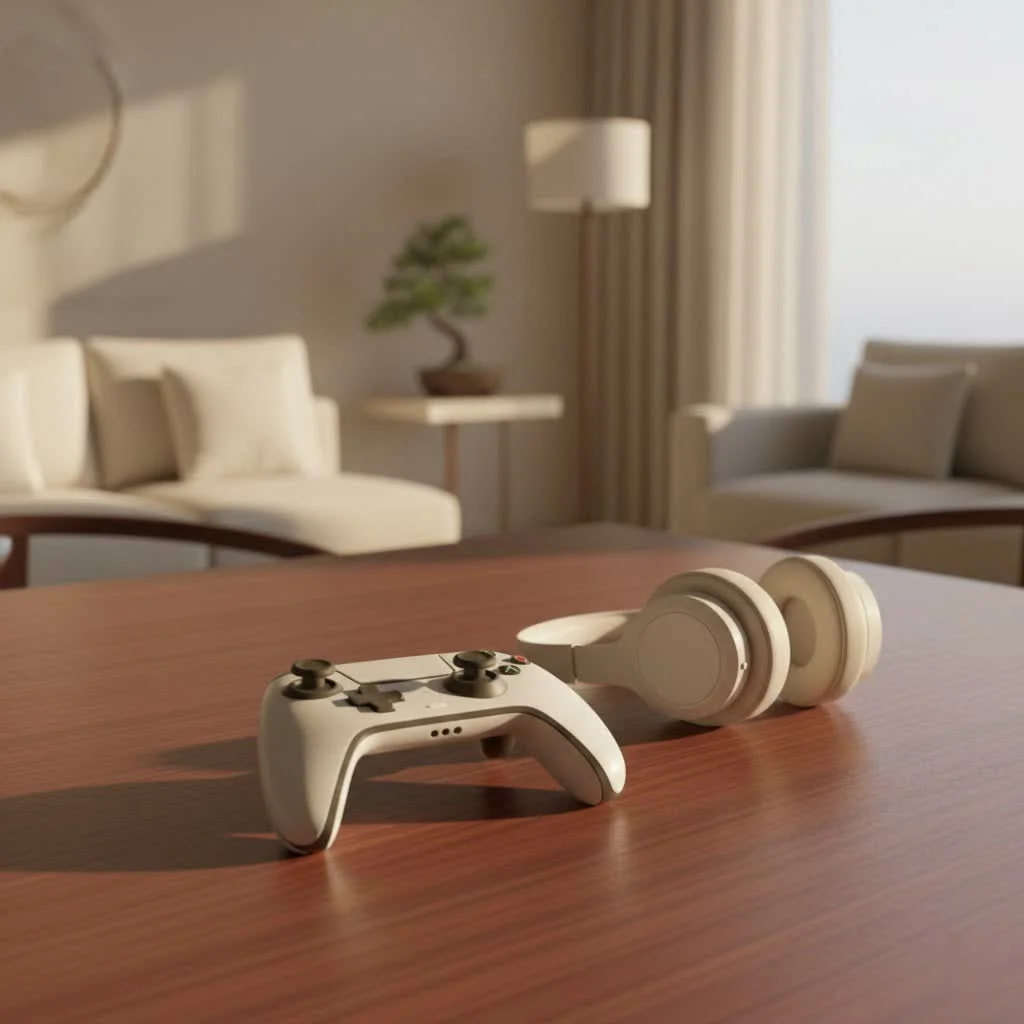
At the heart of Steam’s versatile controller support lies “Steam Input.” Think of it as a powerful translation layer that takes the raw signals from virtually any connected controller – be it an Xbox, PlayStation, Switch Pro, or a generic gamepad – and transforms them into whatever input the game expects. This ingenious software allows you to play almost any game with your preferred controller, even titles that traditionally only support keyboard and mouse.
Why is Steam Input so crucial? It’s all about freedom and flexibility. It breaks down the barriers of hardware compatibility, letting you customize every button, stick, and trigger. It can even emulate keyboard and mouse commands, giving your controller capabilities far beyond its original design. For instance, if a game doesn’t natively support a gamepad, Steam Input can map your controller buttons to keyboard keys or mouse movements, ensuring you never miss out on a game due to control limitations.
Connecting Your Controller to Steam: A Step-by-Step Walkthrough
Getting your controller on Steam is usually a straightforward process, regardless of the brand. Here’s how to connect the most popular types:
Connecting Your Xbox Controller
Xbox controllers are often considered the most natively compatible with Windows PCs and, by extension, Steam.
- Wired Connection: Simply plug your Xbox controller into an available USB port on your PC using a USB-C or Micro-USB cable (depending on your controller model). Windows will typically install the necessary drivers automatically.
- Wireless Connection (with Xbox Wireless Adapter): Plug the official Xbox Wireless Adapter into a USB port on your PC. Press the pairing button on the adapter, then hold the pairing button on your Xbox controller until it connects.
- Bluetooth Connection (Xbox One S/X, Series X/S controllers): If your PC has Bluetooth, press the pairing button on your controller (usually a small button near the USB port) until the Xbox logo starts flashing rapidly. Go to your PC’s Bluetooth settings (
Settings > Devices > Bluetooth & other devices), click “Add Bluetooth or other device,” and select “Bluetooth.” Choose your Xbox Wireless Controller from the list to pair.
Connecting Your PlayStation Controller (DualShock/DualSense)
|
Our Picks for the Best Game Controller in 2026
As an Amazon Associate I earn from qualifying purchases.
|
||
| Num | Product | Action |
|---|---|---|
| 1 | AceGamer Aurora II 2.4G Wireless Bluetooth Controller for PC/Android/Switch/iOS/Switch 2/Steam Deck with Rotary Motors, RGB Hall Effect Joysticks - Upgraded PC Gaming Controller and Back Buttons Lock |

|
| 2 | Xbox Elite Series 2 Core Wireless Gaming Controller – White Series X-S, One, Windows PC, Android, and iOS |
|
| 3 | Logitech G F310 Wired Gamepad Controller Console Like Layout 4 Switch D-Pad PC - Blue/Black |
|
| 4 | EasySMX X15 PC Controller - Enhanced Wireless Bluetooth Controller with Hall Joysticks/Hall Triggers/RGB Lighting - No Stick Drift, No Dead Zone - Work for Windows PC, Android, Steam and Switch |
|
| 5 | Spican Switch 2 Controller, Switch 2 Accessories Wireless Pro Controller with No-drift Hall Effect Joystick, 4 RGB Mode, 10H+ Battery, Turbo&Macro, Full-Size Hand-Curve Design Comfort for Nintendo Switch 2 Games |
|
| 6 | VOYEE Switch Controllers Compatible with Switch/Lite/OLED/PC Windows, 1000mAh Programmable RGB Lightning LED, Wireless Pro Controller with One Key Pairing/Wake Up/Turbo/Vibration |
|
| 7 | 8BitDo Ultimate 2C Wireless Controller for Windows PC and Android, with 1000 Hz Polling Rate, Hall Effect Joysticks and Triggers, and Remappable L4/R4 Bumpers (Green) |
|
| 8 | 8BitDo Ultimate 2 Wireless Controller for Windows PC, Apple, Steam & Android, Gaming Controller with TMR Joysticks, Hall/Tactile Triggers, Motion Control, RGB Fire Ring, 1000Hz Polling Rate, Black |
|
| 9 | ManbaOne Interactive Screen Wireless Gaming Controller for PC/Switch/Switch 2/iOS/Android,Hall Effect Stick & Trigger,RGB Lighting,Remappable Buttons,1800mAh with Charging Dock (Black) |
|
| 10 | PlayStation DualSense® Wireless Controller - Midnight Black |
|
PlayStation controllers offer fantastic features like touchpads and advanced haptics, which Steam Input can often leverage.
- Wired Connection: Connect your DualShock 4 or DualSense controller to your PC using a USB cable.
- Bluetooth Connection: Hold down the PlayStation button and the Share (DualShock 4) or Create (DualSense) button simultaneously until the light bar begins to flash rapidly. On your PC, go to
Settings > Devices > Bluetooth & other devices, click “Add Bluetooth or other device,” select “Bluetooth,” and choose “Wireless Controller” or “DualSense Wireless Controller” from the list to pair.
Connecting Your Nintendo Switch Pro Controller
The Switch Pro Controller is a solid option for PC gaming, especially with its comfortable grip and excellent battery life.
- Bluetooth Connection: Press and hold the small sync button on the top of the Pro Controller until the LED lights on the bottom start flashing. On your PC, navigate to
Settings > Devices > Bluetooth & other devices, click “Add Bluetooth or other device,” select “Bluetooth,” and choose “Pro Controller” from the list.
Connecting Generic Gamepads
Many third-party controllers function well on Steam.
- Wired Connection: Plug the controller directly into a USB port on your PC.
- Bluetooth Connection: Most generic Bluetooth controllers have a dedicated pairing button or a combination of buttons to enter pairing mode (check your controller’s manual). Once in pairing mode, follow the standard PC Bluetooth pairing process.
Expert Tip: The Importance of a Stable Connection
While wireless controllers offer convenience, a wired connection can often provide lower latency and a more stable experience, especially for competitive gaming. If you’re experiencing input lag or disconnects, consider connecting your controller via USB as a primary troubleshooting step.
Configuring Your Controller on Steam for Optimal Performance
Once your controller is connected, the real magic happens in Steam’s settings, where you can tailor it to your exact preferences.
Accessing General Controller Settings
- Open Steam.
- In the top-left corner, click
Steam > Settings. - In the left-hand menu, select
Controller.
Enabling Controller Support
Under “External Gamepad Settings,” you’ll see options to enable “Steam Input” for various controller types: Xbox, PlayStation, Switch Pro, and Generic Gamepad Configuration Support. Make sure the box corresponding to your controller type is checked. This ensures Steam correctly interprets your controller’s inputs.
Diving into Game-Specific Configurations
Steam allows you to customize controller settings for individual games, overriding global settings if needed.
- How to Access: Go to your Steam Library, right-click the game you want to configure, and select
Properties. In the left-hand menu, clickController. Here, you can usually set the “Steam Input” status to “Enable Steam Input.” - The Controller Configurator: After enabling Steam Input, click on “Controller Configurator.” This powerful tool lets you completely remap buttons, adjust joystick curves, set up “Action Sets” for different in-game scenarios (e.g., driving vs. on-foot), and even add keyboard or mouse bindings to your controller. You can browse community-created configurations or build your own from scratch.
Fine-Tuning with Calibration and Advanced Settings
Within the general controller settings, clicking “Calibration & Advanced Settings” or “Support” (for certain controllers) offers deeper customization.
- Adjusting Joystick Dead Zones: This is crucial for combating “stick drift” – where your character or cursor moves without you touching the joystick. By increasing the dead zone, you tell the controller to ignore small, unintentional inputs from the joysticks. Conversely, if you want a more reactive controller, you can lower the dead zone.
- Gyro Calibration and Motion Controls: For controllers with gyroscopes (like PlayStation and Switch Pro), you can calibrate them here for more precise aiming or motion-controlled actions.
- Rumble and LED Settings: You can toggle game rumble (vibration) on or off and even customize LED light colors for supported controllers.
Troubleshooting Common Controller Issues on Steam
Even with Steam’s robust support, you might occasionally encounter issues. Here’s how to tackle some common problems with your controller on Steam:
Controller Not Detected
- Check Physical Connection: Ensure your USB cable is securely plugged in or your Bluetooth connection is active and stable. Try a different USB port.
- Verify Outside Steam: Before blaming Steam, confirm your controller works in Windows. Go to
Windows Search > "Set up USB game controllers"and check if your controller appears and responds to inputs there. If not, it might be a driver or hardware issue. - Steam Input Enabled: Double-check that you’ve enabled the correct “Configuration Support” for your controller type in Steam’s general controller settings.
- Restart Steam/PC: Sometimes a simple restart of Steam or your entire PC can resolve detection issues.
- Big Picture Mode: Launch Steam in Big Picture Mode (the controller icon in the top-right of the Steam client). Many controller settings and troubleshooting tools are more accessible and robust here.
Buttons Not Responding or Incorrectly Mapped
- Use Steam’s “Test Device Inputs” Tool: In Big Picture Mode, go to
Settings > Controller > Test Device Inputs. This visual tool shows exactly what inputs Steam is receiving from your controller, helping you diagnose unresponsive buttons or verify stick drift. - Check Game-Specific Configuration: If buttons are wrong for a particular game, review its “Controller Configurator” settings to see if a custom layout is interfering. Reset to default if needed.
- Conflicting Software: Other background applications with controller remapping features can sometimes interfere. Try closing them.
Dealing with Stick Drift
Stick drift is a common ailment where a joystick registers movement even when not touched.
- Adjust Dead Zones: This is your first line of defense. As discussed, increase the joystick dead zone in
Calibration & Advanced Settingsuntil the unintentional movement stops. - Clean Your Controller: Dust or debris under the joystick can cause drift. A quick clean with compressed air around the base of the stick can sometimes help.
- Hardware Issue: If dead zone adjustments don’t work, the stick mechanism itself might be worn. This often requires repair or replacement.
Interference and Other Devices
Sometimes, other USB devices (like flight sticks, racing wheels, or even some high-end keyboards/mice) can send conflicting signals, interfering with your controller. Try unplugging non-essential peripherals and retesting.
Choosing the Best Game Controller for Your Steam Library
With over a decade of hands-on experience in the game controller landscape, I can tell you that the “best” controller often comes down to personal preference and the games you play. However, for Steam, some options consistently rise to the top:
Xbox Controllers
The Xbox Core Controller (and its predecessors) remains a gold standard for PC gaming. Its native XInput compatibility means it often works seamlessly with games without requiring extensive setup. Xbox Elite Series 2 offers premium features and customization for competitive players. “From my experience, an Xbox controller is almost always a safe bet for a plug-and-play experience on Steam,” says game hardware specialist, Alex Vntut.
PlayStation Controllers
Sony’s DualShock 4 and DualSense controllers are fantastic choices. Beyond traditional inputs, Steam Input does an excellent job of integrating their unique features like the touchpad, advanced rumble, and responsive gyro controls. While they might occasionally require a tiny bit more initial setup than an Xbox controller for full feature parity in some games, the rich feature set is often worth it.
Third-Party and Specialty Controllers
The market is brimming with excellent third-party options:
- 8BitDo: Known for their retro-inspired designs and high build quality, offering great versatility.
- GameSir: Controllers like the G7 Pro Tri-Mode and Nova Lite are gaining popularity for offering premium features (like Hall Effect joysticks) at competitive price points. The GameSir G7 Pro is considered by some to be the best overall PC controller.
- Scuf/PowerA: These brands offer controllers with extra programmable buttons (paddles), often preferred by competitive gamers.
Expert Insight: Hall Effect Joysticks – The Future of Durability
One crucial innovation to look for in a controller is “Hall Effect joysticks.” Unlike traditional potentiometers that wear out, Hall Effect sticks use magnets and electrical current to detect movement, making them highly resistant to wear and tear, and virtually eliminating stick drift issues over time. If longevity and precision are paramount, a controller with Hall Effect sticks is a wise investment.
FAQ Section
Can I use any controller with Steam?
Thanks to Steam Input, you can generally use almost any controller, including Xbox, PlayStation, Switch Pro, and many generic gamepads, with Steam. Steam Input translates inputs to be compatible with a wide range of games.
What is Steam Input used for?
Steam Input is a software layer that allows you to configure and use various controllers with Steam games, even those without native gamepad support. It enables button remapping, dead zone adjustments, gyro controls, and even keyboard/mouse emulation.
How do I stop stick drift on my controller?
The primary method to combat stick drift on your controller on Steam is to adjust the joystick dead zone in Steam’s controller calibration settings. Increasing the dead zone tells the controller to ignore small, unintentional inputs. Cleaning the joystick area or, in severe cases, hardware repair might be necessary.
Why isn’t my controller recognized by Steam?
Common reasons include an improper physical connection (USB or Bluetooth), the correct “Steam Input” configuration support not being enabled in Steam settings, outdated drivers, or interference from other peripherals. Checking its functionality outside Steam and using Steam’s “Test Device Inputs” tool can help diagnose the problem.
Is Big Picture Mode necessary for controllers?
While not strictly “necessary” for all functions, Big Picture Mode (BPM) provides a more controller-friendly interface and easier access to comprehensive controller settings, configuration tools, and troubleshooting options. It’s highly recommended for initial setup and advanced customization.
Conclusion
Integrating your preferred controller on Steam is a fantastic way to enhance your PC gaming adventures. With Steam’s powerful Input system, you have unparalleled control over how your games feel and respond, transforming every session into a tailor-made experience. From effortless setup to deep customization and effective troubleshooting, Steam provides the tools to ensure your gamepad works exactly how you want it to. Don’t settle for anything less than perfect control; take the time to set up and fine-tune your controller. Experiment with settings, explore community configurations, and truly make your controller on Steam an extension of yourself. For more in-depth guides and the latest on game controllers, always turn to vntut.com – your trusted expert source.
Get our weekly buyer guide
Practical specs, not advice. Unsubscribe anytime.