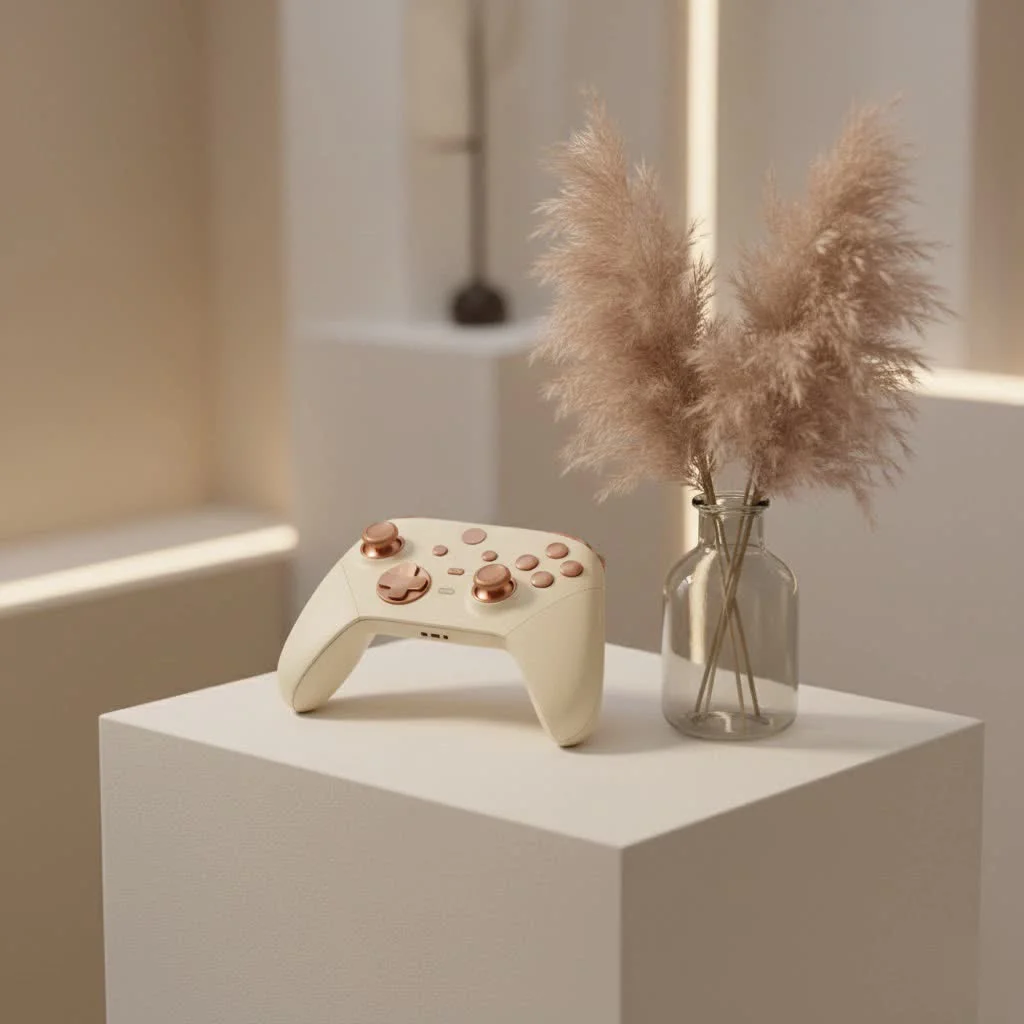
The SNES controller is widely considered a masterpiece of gaming ergonomics due to its groundbreaking design, which introduced a four-button diamond layout, two shoulder buttons (L and R), and a comfortable, curved “dog bone” shape. This revolutionary configuration, first released in 1990 in Japan, set new industry standards for player interaction and comfort, influencing nearly all subsequent gamepad designs and remaining highly revered by gamers and developers today.
What Makes the SNES Controller So Iconic?
The SNES controller stands out primarily due to its groundbreaking design, which perfectly balanced functionality with user comfort. Moving away from the simpler rectangular NES controller, Nintendo introduced a more sophisticated input device that offered players greater control and a significantly more ergonomic grip. This wasn’t just an aesthetic upgrade; it was a carefully calculated engineering feat designed to enhance the gaming experience.
The Revolutionary Button Layout and Ergonomics
The most defining feature of the SNES controller is undoubtedly its distinctive four-button diamond layout (A, B, X, Y), complemented by two shoulder buttons (L and R). This configuration was a radical departure, allowing for more complex inputs and greater player agency. The colored buttons on the Japanese and PAL versions also added a vibrant, playful touch that became instantly recognizable.
Why was this layout so impactful? It moved beyond simple “jump and attack” functions, enabling games to introduce actions like spinning, charging, and context-sensitive commands with unprecedented fluidity. The addition of L and R buttons marked the first time shoulder buttons were prominently featured on a mainstream console controller, paving the way for intricate control schemes in future generations. As game design veteran Marcus Chen notes, “The SNES controller’s layout wasn’t just intuitive; it was prophetic. It laid the groundwork for how we interact with games even today, a shows its forward-thinking design.”
The controller’s subtle curvature and extended “dog bone” shape also fit naturally into the hands, reducing fatigue during long gaming sessions. This focus on ergonomics was a significant leap, acknowledging that comfort was crucial for sustained engagement and precise control.
The D-Pad: A Standard for Precision
Nintendo had already perfected the D-pad (directional pad) with the NES, and the SNES controller continued this tradition of excellence. Its precise, responsive D-pad offered unparalleled accuracy for 2D platformers, fighting games, and RPGs – genres that flourished on the Super Nintendo. Unlike analog sticks, which would come later, the D-pad provided crisp, unambiguous directional input, critical for navigating treacherous levels or executing complex fighting game moves. This precise control became a hallmark of the SNES gaming experience.
Robust Construction and Durability
|
Our Picks for the Best Game Controller in 2026
As an Amazon Associate I earn from qualifying purchases.
|
||
| Num | Product | Action |
|---|---|---|
| 1 | Xbox Elite Series 2 Core Wireless Gaming Controller – White Series X-S, One, Windows PC, Android, and iOS |

|
| 2 | VOYEE Switch Controllers Compatible with Switch/Lite/OLED/PC Windows, 1000mAh Programmable RGB Lightning LED, Wireless Pro Controller with One Key Pairing/Wake Up/Turbo/Vibration |
|
| 3 | AceGamer Aurora II 2.4G Wireless Bluetooth Controller for PC/Android/Switch/iOS/Switch 2/Steam Deck with Rotary Motors, RGB Hall Effect Joysticks - Upgraded PC Gaming Controller and Back Buttons Lock |
|
| 4 | 8BitDo Ultimate 2 Wireless Controller for Windows PC, Apple, Steam & Android, Gaming Controller with TMR Joysticks, Hall/Tactile Triggers, Motion Control, RGB Fire Ring, 1000Hz Polling Rate, Black |
|
| 5 | Spican Switch 2 Controller, Switch 2 Accessories Wireless Pro Controller with No-drift Hall Effect Joystick, 4 RGB Mode, 10H+ Battery, Turbo&Macro, Full-Size Hand-Curve Design Comfort for Nintendo Switch 2 Games |
|
| 6 | PlayStation DualSense® Wireless Controller - Midnight Black |
|
| 7 | 8BitDo Ultimate 2C Wireless Controller for Windows PC and Android, with 1000 Hz Polling Rate, Hall Effect Joysticks and Triggers, and Remappable L4/R4 Bumpers (Green) |
|
| 8 | Logitech G F310 Wired Gamepad Controller Console Like Layout 4 Switch D-Pad PC - Blue/Black |
|
| 9 | ManbaOne Interactive Screen Wireless Gaming Controller for PC/Switch/Switch 2/iOS/Android,Hall Effect Stick & Trigger,RGB Lighting,Remappable Buttons,1800mAh with Charging Dock (Black) |
|
| 10 | EasySMX X15 PC Controller - Enhanced Wireless Bluetooth Controller with Hall Joysticks/Hall Triggers/RGB Lighting - No Stick Drift, No Dead Zone - Work for Windows PC, Android, Steam and Switch |
|
Another often-praised aspect of the original SNES controller is its build quality. Made with high-grade plastics and durable components, these controllers were designed to withstand countless hours of intense gameplay. Many original SNES controllers are still functional today, decades after their release, a shows Nintendo’s commitment to durability. This robust construction meant that accidental drops or aggressive button mashing were less likely to render the controller unusable, ensuring longevity for players and a strong return on investment.
How Did the SNES Controller Influence Future Gamepads?
The impact of the SNES controller on the evolution of game controllers cannot be overstated. Its innovations became industry standards.
- Four Face Buttons: The diamond configuration of the A, B, X, Y buttons became a de facto standard, influencing controllers from PlayStation to Xbox, albeit with different labeling. This layout proved to be the most efficient for mapping multiple actions to a player’s thumb.
- Shoulder Buttons: The L and R buttons revolutionized gameplay, allowing for new layers of control, such as cycling through inventory, blocking, or executing special moves without moving the thumb from the face buttons. This concept is now fundamental to virtually every modern gamepad.
- Ergonomics: The comfortable, hand-fitting shape pioneered by the SNES controller became a blueprint for future designs. Controller manufacturers realized that comfort directly translated to longer playtimes and a more enjoyable experience.
Can I Still Use an SNES Controller Today?
Absolutely! The enduring popularity and classic status of the SNES controller mean that there are numerous ways to experience its original feel, even on modern systems.
Original Hardware with Emulation
For purists, connecting an original SNES console to a modern TV via an upscaler provides the most authentic experience. However, for broader compatibility, many emulators and retro gaming devices support the SNES controller. USB adapters are widely available that allow you to plug your original SNES controller into a PC, Mac, or even a Raspberry Pi, instantly transforming it into a versatile gamepad for your favorite retro ROMs. This bridge between vintage hardware and modern platforms lets you enjoy classic titles with the controller they were designed for.
Modern Replicas and Wireless Options
Several companies offer high-quality replicas of the SNES controller, often with modern enhancements like USB connectivity or even Bluetooth for wireless play. These controllers aim to replicate the feel and form factor of the original while offering the convenience of contemporary technology. Brands like 8BitDo are particularly renowned for their excellent SNES-style wireless controllers, which often include additional features while staying true to the iconic design. These options are perfect for those who want the classic experience without hunting down vintage hardware or dealing with cables.
Maintaining Your Classic SNES Controller
To ensure your SNES controller continues to deliver optimal performance for years to come, a little care goes a long way.
- Regular Cleaning: Over time, grime and dust can accumulate between buttons and in crevices. Use a soft, dry cloth for exterior cleaning. For deeper cleaning, carefully open the controller (you’ll need a specialized game bit screwdriver) and clean the contacts and rubber membranes with isopropyl alcohol and cotton swabs.
- Cable Care: If you’re using a wired controller, avoid wrapping the cable too tightly around the controller itself, as this can strain the wiring and lead to fraying. Store it loosely coiled to prevent damage.
- Proper Storage: Keep your controllers in a clean, dry place, away from direct sunlight or extreme temperatures, which can degrade the plastic and rubber components. A dedicated drawer or shelf will protect them from dust and accidental damage.
- Button Inspection: Periodically check the responsiveness of your buttons and D-pad. If they feel sticky or unresponsive, it might be time for a deep clean or membrane replacement. Replacement parts are readily available from online retailers.
Frequently Asked Questions About the SNES Controller
What are the main differences between the US and Japanese/PAL SNES controllers?
The primary difference is aesthetic. US SNES controllers feature shades of purple for the A, B, X, Y buttons (two concave, two convex) and a gray body. Japanese and PAL region controllers have a lighter gray body with four distinct colored convex buttons (red, yellow, blue, green). Functionally, they are identical.
Can I use an original SNES controller on my Nintendo Switch?
While not directly compatible, you can use third-party adapters (e.g., from 8BitDo or Mayflash) that allow you to connect original wired SNES controllers to your Nintendo Switch, often mapping them to the Switch’s input scheme.
Why does the SNES controller have shoulder buttons?
The shoulder buttons (L and R) were a revolutionary addition that allowed for more complex control schemes. They enabled players to perform actions like strafing, cycling through inventory, or engaging special abilities without moving their thumb from the face buttons or D-pad, greatly expanding gameplay possibilities.
Is the SNES controller suitable for modern fighting games?
For classic 2D fighting games, the SNES D-pad is often preferred for its precision. However, for modern 3D fighting games that often utilize analog stick movement and more complex button combinations, a contemporary controller might offer a more optimized experience. Many retro fighting game enthusiasts still swear by the SNES D-pad for its tactile feel and accuracy.
What is the “dog bone” design referring to?
The “dog bone” design refers to the distinctive shape of the SNES controller, which features extended, rounded handles on either side, resembling a dog bone. This ergonomic design allowed for a much more comfortable grip compared to its predecessor, the rectangular NES controller.
Where can I find replacement parts for an SNES controller?
Replacement parts such as D-pads, buttons, rubber membranes, and even new shells can be found on various online marketplaces like Amazon, eBay, and specialized retro gaming parts websites.
What’s the best way to clean sticky SNES buttons?
For sticky buttons, a deep clean is usually required. This involves carefully opening the controller, removing the buttons and rubber membranes, and cleaning them with isopropyl alcohol (rubbing alcohol) and cotton swabs. Ensure all components are completely dry before reassembling.
The Undisputed King of 16-Bit Control
The SNES controller isn’t just a relic of the past; it’s a living legend that continues to inspire and influence. Its ergonomic brilliance, iconic button layout, and robust construction cemented its place in gaming history, setting standards that persist to this day. Whether you’re a seasoned veteran revisiting classic titles or a newcomer exploring the roots of modern gaming, picking up an SNES controller offers a tangible connection to a golden era. So go ahead, dust off that classic, or connect a modern replica, and experience firsthand why this remarkable piece of hardware remains a timeless masterpiece. The precision and comfort it offers are unmatched, making every gaming session a journey back to pure, unadulterated fun.
Maintain Your Classic SNES Controller
To ensure your SNES controller continues to deliver optimal performance for years to come, follow these simple maintenance steps.
Over time, grime and dust can accumulate between buttons and in crevices. Use a soft, dry cloth for exterior cleaning. For deeper cleaning, carefully open the controller (you'll need a specialized game bit screwdriver) and clean the contacts and rubber membranes with isopropyl alcohol and cotton swabs.
If you're using a wired controller, avoid wrapping the cable too tightly around the controller itself, as this can strain the wiring and lead to fraying. Store it loosely coiled to prevent damage and extend its lifespan.
Keep your controllers in a clean, dry place, away from direct sunlight or extreme temperatures, which can degrade the plastic and rubber components. A dedicated drawer or shelf will protect them from dust and accidental damage, preserving their condition.
Periodically check the responsiveness of your buttons and D-pad. If they feel sticky or unresponsive, it might be time for a deep clean or membrane replacement. Replacement parts are readily available from online retailers, allowing for easy repairs.
Get our weekly buyer guide
Practical specs, not advice. Unsubscribe anytime.
The introduction of the shoulder buttons was a game-changer, literally! It’s hard to imagine gaming without L and R now. My only minor gripe is that sometimes the D-pad can feel a little stiff compared to some newer retro controllers, but it’s still incredibly precise for platformers.
I totally agree with the points about the ‘dog bone’ shape. It’s just so comfortable, even after hours of playing Super Metroid. I’ve tried modern controllers, but nothing beats the feel of the original SNES pad in my hands. It really is a timeless design.
While I appreciate the historical significance of the four-button diamond layout, I sometimes find myself wishing for a more modern analog stick for certain games. For classic SNES titles it’s perfect, but if you’re trying to adapt it for other systems, it can feel a bit limiting. Still, for what it was designed for, it’s solid.
This controller truly set the standard. I remember getting my SNES in 1990 and being blown away by how much more comfortable it was than the NES controller. The curved design made such a difference for longer play sessions. It’s amazing how well it holds up even today.