For over a decade, my hands have been intimately familiar with the intricate dance of buttons, sticks, and triggers that define the Playstation Controller experience. From the groundbreaking innovations of the original DualShock to the revolutionary haptics of the DualSense, these devices aren’t just accessories; they are the direct conduit to countless virtual worlds. At vntut.com, we believe that truly mastering your PlayStation controller means understanding its anatomy, appreciating its engineering, and knowing how to keep it performing at its peak. This article will guide you through everything you need to know about the PlayStation controller, ensuring you get the most out of every gaming session.
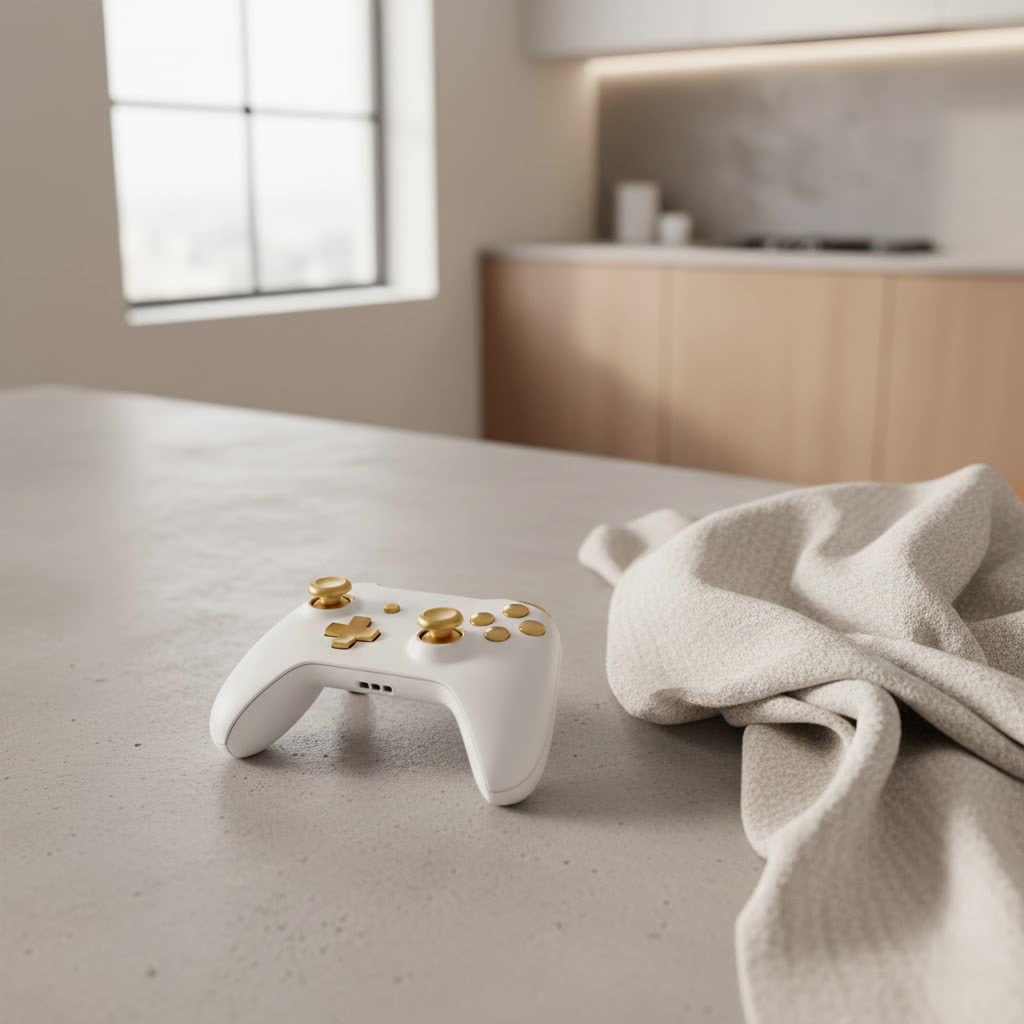
Whether you’re a seasoned gamer or just starting your journey, the right controller can elevate your play. We’ll explore the evolution, core features, and best practices for maintenance, helping you make informed choices and maximize your gaming potential.
The Evolution of the PlayStation Controller: From Simple Grips to Sensory Immersion
The journey of the PlayStation controller is a testament to innovation, continuously adapting to the demands of increasingly complex games and player expectations. Each generation has introduced pivotal enhancements, setting new benchmarks for interactive gaming.
What are the main generations of PlayStation controllers?
|
Our Picks for the Best Game Controller in 2026
As an Amazon Associate I earn from qualifying purchases.
|
||
| Num | Product | Action |
|---|---|---|
| 1 | Spican Switch 2 Controller, Switch 2 Accessories Wireless Pro Controller with No-drift Hall Effect Joystick, 4 RGB Mode, 10H+ Battery, Turbo&Macro, Full-Size Hand-Curve Design Comfort for Nintendo Switch 2 Games |

|
| 2 | AceGamer Aurora II 2.4G Wireless Bluetooth Controller for PC/Android/Switch/iOS/Switch 2/Steam Deck with Rotary Motors, RGB Hall Effect Joysticks - Upgraded PC Gaming Controller and Back Buttons Lock |
|
| 3 | Logitech G F310 Wired Gamepad Controller Console Like Layout 4 Switch D-Pad PC - Blue/Black |
|
| 4 | VOYEE Switch Controllers Compatible with Switch/Lite/OLED/PC Windows, 1000mAh Programmable RGB Lightning LED, Wireless Pro Controller with One Key Pairing/Wake Up/Turbo/Vibration |
|
| 5 | PlayStation DualSense® Wireless Controller - Midnight Black |
|
| 6 | 8BitDo Ultimate 2 Wireless Controller for Windows PC, Apple, Steam & Android, Gaming Controller with TMR Joysticks, Hall/Tactile Triggers, Motion Control, RGB Fire Ring, 1000Hz Polling Rate, Black |
|
| 7 | EasySMX X15 PC Controller - Enhanced Wireless Bluetooth Controller with Hall Joysticks/Hall Triggers/RGB Lighting - No Stick Drift, No Dead Zone - Work for Windows PC, Android, Steam and Switch |
|
| 8 | 8BitDo Ultimate 2C Wireless Controller for Windows PC and Android, with 1000 Hz Polling Rate, Hall Effect Joysticks and Triggers, and Remappable L4/R4 Bumpers (Green) |
|
| 9 | ManbaOne Interactive Screen Wireless Gaming Controller for PC/Switch/Switch 2/iOS/Android,Hall Effect Stick & Trigger,RGB Lighting,Remappable Buttons,1800mAh with Charging Dock (Black) |
|
| 10 | Xbox Elite Series 2 Core Wireless Gaming Controller – White Series X-S, One, Windows PC, Android, and iOS |
|
The main generations of PlayStation controllers are the original PlayStation controller, the DualShock series (DualShock 1, 2, 3, and 4), and the latest DualSense controller for the PlayStation 5. Each iteration built upon its predecessor, refining ergonomics and introducing new technologies.
The original PlayStation controller laid the foundation, but it was the introduction of the DualShock that truly revolutionized console gaming with its dual analog sticks and force feedback vibration. The DualShock 2 and 3 refined this design, adding pressure-sensitive buttons and wireless capabilities. The DualShock 4, accompanying the PlayStation 4, brought a touch bar, motion sensors, and an integrated speaker, further expanding player interaction. Finally, the DualSense controller for the PlayStation 5 has redefined tactile feedback with its haptic technology and adaptive triggers, making in-game actions feel incredibly real.
DualShock 4: The Trusted Companion of a Generation
The PlayStation 4’s DualShock 4 controller quickly became a beloved piece of hardware, renowned for its comfortable design, responsive controls, and a suite of innovative features that pushed gaming immersion forward. Even with the advent of the PS5, many still cherish its reliable performance.
What makes the DualShock 4 controller still relevant?
The DualShock 4 controller remains relevant due to its ergonomic design, broad compatibility with PS4 and PC games, and its robust build quality, making it a reliable and versatile option for many gamers. Its familiar layout and tactile buttons are preferred by a significant portion of the gaming community.
The DualShock 4 introduced a significant ergonomic redesign from its predecessors, offering a more comfortable grip for extended play sessions. Its light bar, integrated speaker, and sensitive motion controls added layers of immersion to many PS4 titles. Furthermore, its versatility extends beyond the PS4, as it’s widely supported on PC via Steam and other platforms, making it a fantastic multi-purpose controller. “The DualShock 4 struck a perfect balance between innovation and familiarity,” observes Alex “Apex” Chen, a veteran game hardware analyst. “Its design became an industry standard, influencing countless other controllers.”
DualSense: A New Era of Tactile Feedback
With the launch of the PlayStation 5 came the DualSense controller, a revolutionary step forward in controller technology. It wasn’t merely an upgrade; it was a reimagining of how players interact with their games, focusing on sensory immersion like never before.
What are the key innovations of the DualSense controller?
The key innovations of the DualSense controller are its advanced haptic feedback and adaptive triggers, which provide unparalleled tactile immersion by simulating in-game sensations and varying resistance based on virtual actions. These features dynamically respond to gameplay, offering a completely new layer of realism.
Haptic feedback in the DualSense isn’t just a simple rumble; it’s a sophisticated system capable of producing nuanced vibrations that mimic specific textures, impacts, and environmental effects. Imagine feeling the gentle patter of rain or the gritty resistance of sand beneath your virtual feet. The adaptive triggers, on the other hand, dynamically adjust their tension based on in-game actions, allowing you to feel the strain of drawing a bowstring or the kickback of a firearm. These features transform how you experience games, making you feel more connected to the action than ever before.
How does haptic feedback enhance gameplay?
Haptic feedback in the DualSense controller enhances gameplay by providing a far more detailed and nuanced range of vibrations than traditional rumble, allowing players to feel specific in-game sensations like weapon recoil, environmental textures, or character movements. This tactile information adds depth and realism to the gaming experience.
Unlike the generic vibrations of older controllers, DualSense haptics are designed to immerse you directly into the game world. You can discern the difference between different types of surfaces your character walks on, the impact of various projectiles, or even the feeling of a vehicle engine starting. This precision feedback provides crucial sensory cues that make actions feel more immediate and impactful, heightening engagement and providing a more authentic experience.
What are adaptive triggers and how do they work?
Adaptive triggers are a feature of the DualSense controller that can dynamically adjust their resistance, tension, and even stop completely, based on in-game actions like firing a weapon, drawing a bow, or accelerating a vehicle. They work by using small motors within the triggers to control spring tension, creating a physical sensation that matches the on-screen action.
This technology allows game developers to program different levels of resistance into the L2 and R2 buttons. For instance, in a racing game, you might feel a lighter touch for acceleration, but a significant push-back when braking hard. In a first-person shooter, the trigger might become stiffer to simulate the feeling of pulling a real trigger, or even jam if your weapon malfunctions. This physical feedback adds a remarkable layer of realism and depth that was previously impossible, making every interaction more visceral.
Connecting and Maintaining Your PlayStation Controller
Understanding how to properly connect and care for your PlayStation controller is crucial for a seamless and long-lasting gaming experience. Both the DualShock 4 and DualSense controllers offer versatile connectivity options, but they also require a bit of attention to keep them in top shape.
How do I connect my PlayStation controller to my console?
To connect your PlayStation controller to your console, you can typically use a USB cable to pair it for the first time, or for subsequent connections, you can power on the controller and console, and it should automatically connect wirelessly. For a new DualSense or DualShock 4, simply plug it into the console’s USB port with the provided cable and press the PlayStation button.
Once plugged in, the controller will automatically pair with your console. After this initial pairing, you can usually disconnect the USB cable and the controller will connect wirelessly via Bluetooth whenever you turn it on and the console is nearby. If you encounter issues, a quick reset of the controller by pressing a small button on the back (often requiring a paperclip) can usually resolve connectivity problems.
What are the best practices for maintaining my PlayStation controller?
Best practices for maintaining your PlayStation controller include regularly cleaning it to prevent grime buildup, storing it safely to avoid drops or spills, and optimizing battery life by fully charging it when low and unplugging it when full. Avoid exposing it to extreme temperatures or direct sunlight.
Keeping your controller clean is vital. Use a soft, dry cloth for general cleaning. For grime in crevices, a cotton swab lightly dampened with rubbing alcohol can work wonders – just be sure not to let any liquid drip into the controller’s internals. Regularly check for stick drift or button responsiveness issues, which can often be fixed with a thorough cleaning or by recalibrating through console settings. Proper battery management also prolongs its life; avoid constantly keeping it plugged in if it’s already fully charged.
How can I improve my PlayStation controller’s battery life?
To improve your PlayStation controller’s battery life, you can dim the light bar, reduce vibration intensity, shorten the auto-off timer, and minimize speaker volume in the controller’s settings menu. Regularly charging it fully and avoiding constant overcharging can also contribute to battery longevity.
The light bar, haptic feedback, and built-in speaker are all features that draw significant power. By adjusting these settings, particularly the light bar brightness and vibration intensity, you can noticeably extend the time between charges. For DualSense controllers, adaptive trigger effects also consume power, so reducing their intensity in certain games might also help. Don’t forget to set your controller to automatically turn off after a period of inactivity to save power when you step away from the game.
Customization and Accessories: Personalizing Your Gaming Experience
Beyond the standard functionality, a thriving ecosystem of customization options and accessories exists for PlayStation controllers. These can enhance comfort, provide a competitive edge, or simply add a personal touch to your gaming setup.
What accessories can enhance my PlayStation controller experience?
Accessories that can enhance your PlayStation controller experience include charging docks for convenient power, grip covers for improved comfort and protection, analog stick caps for better grip and precision, and back button attachments for extra programmable inputs. These additions can personalize your controller and optimize performance.
Charging docks keep your controller neatly stored and fully charged, eliminating cable clutter. Grip covers, often made of silicone, provide a softer, more secure hold and protect your controller from sweat and minor drops. Analog stick caps (thumb grips) come in various textures and heights, allowing you to fine-tune your aim and control. For competitive players, back button attachments, like the official PlayStation Back Button Attachment for DualShock 4, add extra customizable buttons to the rear of the controller, allowing for faster, more complex inputs without removing your thumbs from the sticks.
Can I customize the look of my PlayStation controller?
Yes, you can customize the look of your PlayStation controller through various methods, including buying different colored official controllers, applying custom skins or decals, or replacing shell components and buttons with aftermarket kits. These options allow for significant personalization to match your style.
Sony often releases official controllers in a wide array of colors, from Midnight Black to Cosmic Red and Galactic Purple. If you’re looking for something more unique, third-party companies offer vinyl skins and decals that can completely change your controller’s aesthetic without permanent modifications. For the more adventurous, replacement faceplates, buttons, and even translucent shells are available, allowing for a complete overhaul of your controller’s appearance.
Choosing the Right PlayStation Controller for You
Deciding which PlayStation controller is best suited for your needs depends on a variety of factors, including the console you own, your gaming preferences, and your budget. Both the DualShock 4 and DualSense offer compelling experiences, but they cater to slightly different requirements.
Should I choose a DualShock 4 or DualSense controller?
You should choose a DualShock 4 if you primarily game on a PlayStation 4 or PC and prioritize affordability and a proven ergonomic design. Opt for a DualSense if you own a PlayStation 5 and want to experience the cutting-edge haptic feedback and adaptive triggers for maximum immersion in next-gen games.
The DualSense is undoubtedly the superior controller for PS5 gaming, offering features that are integral to many new titles. However, the DualShock 4 remains an excellent, more budget-friendly option for PS4 owners and PC gamers who might not need the latest tactile innovations. Consider the games you play most: if they heavily utilize DualSense features, the upgrade is worthwhile. If you’re primarily playing older titles or on different platforms, the DualShock 4 offers fantastic value.
Frequently Asked Questions
Q: Is the DualSense controller compatible with PlayStation 4?
A: No, the DualSense controller is not officially compatible with the PlayStation 4 console for gameplay. While some PC games or streaming services might recognize it, it cannot be used natively to play PS4 games on a PS4 console.
Q: How long does a PlayStation controller battery typically last?
A: A PlayStation controller battery typically lasts between 4 to 8 hours on a single charge, depending on the model (DualShock 4 generally lasts less than DualSense) and the intensity of features like vibration, light bar, and speaker usage.
Q: What is stick drift and how can I fix it?
A: Stick drift is when the analog stick registers movement even when not being touched, often caused by dust or wear inside the mechanism. You can try cleaning around the stick with compressed air or a cotton swab with rubbing alcohol, or in some cases, recalibrating the controller through console settings. For severe cases, repair or replacement might be necessary.
Q: Can I use a wired connection with my PlayStation controller?
A: Yes, both DualShock 4 and DualSense controllers can be used with a wired USB connection. This is often preferred by competitive gamers for minimal input lag and ensures a consistent power supply without relying on battery life.
Q: Are there any official pro controllers for PlayStation?
A: Yes, Sony has released official “Pro” style controllers such as the DualSense Edge for the PlayStation 5, which offers customizable back buttons, swappable stick modules, and adjustable trigger stops, catering to serious and competitive gamers.
Conclusion
The PlayStation controller is more than just a peripheral; it’s the heart of your gaming interaction, a meticulously engineered device designed to translate your intentions into thrilling virtual realities. From the robust reliability of the DualShock 4 to the groundbreaking sensory experience of the DualSense, understanding its intricacies empowers you to game smarter, play better, and maintain your gear for countless hours of enjoyment. By embracing the insights shared by vntut.com, you’re not just holding a controller; you’re wielding a finely tuned instrument, ready to conquer any challenge the gaming world throws your way. Now go forth, game on, and feel the difference a truly mastered PlayStation controller makes!
