Welcome to the expansive world of PC gaming, where choice and flexibility reign supreme. While the classic mouse and keyboard setup has its undeniable strengths, there are countless games where an Xbox Controller For Pc elevates the experience from good to absolutely phenomenal. Imagine navigating vast open worlds, executing precise racing maneuvers, or delivering bone-crushing combos in fighting games with the comfortable, familiar grip of an Xbox controller. It’s not just about comfort; it’s about unlocking a more immersive and intuitive way to play. Whether you’re a seasoned PC gamer looking to diversify your input methods or a console veteran transitioning to Windows, integrating an Xbox controller into your PC setup is a straightforward process that promises a significant upgrade to your gaming enjoyment.
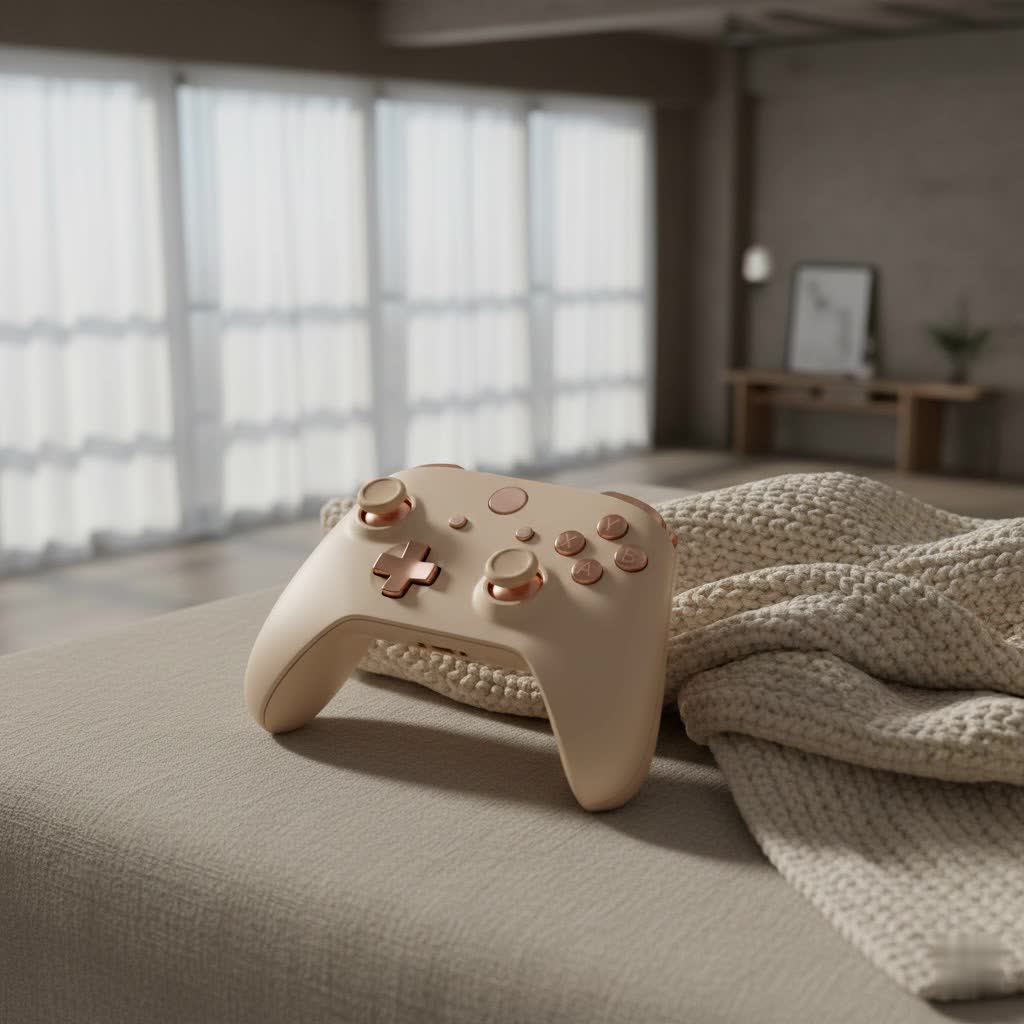
Why Choose an Xbox Controller for PC?
|
Our Picks for the Best Game Controller in 2026
As an Amazon Associate I earn from qualifying purchases.
|
||
| Num | Product | Action |
|---|---|---|
| 1 | EasySMX X15 PC Controller - Enhanced Wireless Bluetooth Controller with Hall Joysticks/Hall Triggers/RGB Lighting - No Stick Drift, No Dead Zone - Work for Windows PC, Android, Steam and Switch |

|
| 2 | Xbox Elite Series 2 Core Wireless Gaming Controller – White Series X-S, One, Windows PC, Android, and iOS |
|
| 3 | ManbaOne Interactive Screen Wireless Gaming Controller for PC/Switch/Switch 2/iOS/Android,Hall Effect Stick & Trigger,RGB Lighting,Remappable Buttons,1800mAh with Charging Dock (Black) |
|
| 4 | Logitech G F310 Wired Gamepad Controller Console Like Layout 4 Switch D-Pad PC - Blue/Black |
|
| 5 | Spican Switch 2 Controller, Switch 2 Accessories Wireless Pro Controller with No-drift Hall Effect Joystick, 4 RGB Mode, 10H+ Battery, Turbo&Macro, Full-Size Hand-Curve Design Comfort for Nintendo Switch 2 Games |
|
| 6 | VOYEE Switch Controllers Compatible with Switch/Lite/OLED/PC Windows, 1000mAh Programmable RGB Lightning LED, Wireless Pro Controller with One Key Pairing/Wake Up/Turbo/Vibration |
|
| 7 | 8BitDo Ultimate 2C Wireless Controller for Windows PC and Android, with 1000 Hz Polling Rate, Hall Effect Joysticks and Triggers, and Remappable L4/R4 Bumpers (Green) |
|
| 8 | AceGamer Aurora II 2.4G Wireless Bluetooth Controller for PC/Android/Switch/iOS/Switch 2/Steam Deck with Rotary Motors, RGB Hall Effect Joysticks - Upgraded PC Gaming Controller and Back Buttons Lock |
|
| 9 | 8BitDo Ultimate 2 Wireless Controller for Windows PC, Apple, Steam & Android, Gaming Controller with TMR Joysticks, Hall/Tactile Triggers, Motion Control, RGB Fire Ring, 1000Hz Polling Rate, Black |
|
| 10 | PlayStation DualSense® Wireless Controller - Midnight Black |
|
For many gamers, the Xbox controller isn’t just a peripheral; it’s an extension of their gaming self. There are several compelling reasons why it remains the gold standard for PC controller gaming.
Seamless Compatibility
One of the most significant advantages of using an Xbox controller for PC is its unparalleled compatibility. Microsoft, as the creator of both Windows and Xbox, has ensured that their controllers work seamlessly with Windows operating systems. Most PC games are developed with Xbox controller input in mind, leveraging Microsoft’s XInput API, which means true plug-and-play functionality. You’ll rarely encounter compatibility issues, making the Xbox controller a reliable choice for your entire game library.
Ergonomic Comfort for Long Sessions
Gaming sessions can stretch for hours, and comfort is paramount. Xbox controllers are renowned for their ergonomic design, meticulously sculpted to fit a wide range of hand sizes naturally. The textured grips, intuitive button placement, and responsive triggers significantly reduce hand fatigue, allowing you to stay focused on the action for longer without discomfort. This thoughtful design means you can dive deep into epic adventures or competitive matches without compromising your physical well-being.
Precision and Responsiveness
In the heat of battle or during a crucial race, every millisecond and every input matters. Xbox controllers deliver exceptional precision and responsiveness. Their analog sticks offer fluid, accurate movements, while the triggers provide nuanced control over acceleration, braking, or aiming. This level of fidelity ensures your commands are translated into in-game actions with minimal latency, giving you the edge in fast-paced scenarios where accuracy can mean the difference between victory and defeat.
Industry Standard for PC Gaming
Over the years, the Xbox controller has cemented its position as the de facto standard for controller-based PC gaming. This widespread adoption means that virtually any game designed with controller support will likely have excellent optimization for the Xbox layout. From indie darlings to AAA blockbusters, developers anticipate that many players will be using an Xbox controller for PC, ensuring a polished and intuitive experience right out of the box.
Connecting Your Xbox Controller to PC: All Methods Explained
Getting your Xbox controller connected to your PC is surprisingly easy, with several options depending on your controller model and PC setup. Let’s break down the most common methods.
The Wired Way: Simple Plug-and-Play
This is by far the simplest and most reliable method for connecting your Xbox controller to your PC. It’s truly plug-and-play, requiring virtually no setup.
What Cable to Use?
- Xbox One Controllers (older models): Typically use a Micro-USB cable.
- Xbox Series X|S Controllers (newer models) and some newer Xbox One controllers: Utilize a USB-C cable.
Steps:
- Grab the appropriate USB cable for your controller.
- Plug one end into the charging port on the top of your Xbox controller.
- Plug the other end into an available USB port on your PC.
- Your Windows system should automatically detect the controller and install any necessary drivers. The Xbox button on your controller will light up, indicating it’s ready for use.
Going Wireless: Bluetooth Connectivity
For a cleaner, cable-free setup, Bluetooth is an excellent option for newer Xbox controllers.
Controller Compatibility:
Only Xbox One controllers released after 2016 and all Xbox Series X|S controllers feature Bluetooth connectivity. If your controller lacks Bluetooth, you’ll need the Xbox Wireless Adapter (discussed next). You can usually tell by the plastic around the Xbox button; on Bluetooth-enabled controllers, it’s part of the main face of the controller, not a separate piece of plastic.
PC Requirements:
Your PC needs to have built-in Bluetooth, and you should be running Windows 10 Anniversary Update (version 1607) or later, or Windows 11 for optimal performance.
Step-by-Step Pairing:
- Ensure your PC’s Bluetooth is turned on. Go to
Settings > Bluetooth & devices(Windows 11) orSettings > Devices > Bluetooth & other devices(Windows 10) and toggle Bluetooth to “On.” - Turn on your Xbox controller by pressing the Xbox button.
- Press and hold the small Pair button (located on the top edge of the controller, near the USB port) for about three seconds until the Xbox button starts flashing rapidly. This indicates pairing mode.
- On your PC, select
Add device(Windows 11) orAdd Bluetooth or other device > Bluetooth(Windows 10). - Select “Xbox Wireless Controller” from the list of found devices.
- Once connected, the Xbox button on your controller will stop flashing and remain solid.
Limitations:
When connected via Bluetooth, certain controller attachments like headsets and chatpads typically won’t function.
The Dedicated Approach: Xbox Wireless Adapter
If your PC doesn’t have Bluetooth, or you prefer a more robust wireless connection with full headset support, the Xbox Wireless Adapter for Windows is your go-to solution. This proprietary adapter offers lower latency and a more stable connection, often preferred by competitive gamers.
Benefits:
- Lower Latency: Often provides a more responsive connection compared to standard Bluetooth.
- Headset Support: Allows you to use compatible Xbox headsets directly with your controller, a feature typically unavailable over Bluetooth.
- Multiple Controllers: Supports connecting up to eight controllers simultaneously.
How to Connect:
- Plug the Xbox Wireless Adapter into an available USB port on your PC.
- Press the Xbox button on your controller to turn it on.
- Press and hold the small pairing button on the Xbox Wireless Adapter until its light starts flashing.
- Then, press and hold the Pair button on your Xbox controller for about three seconds until the Xbox button starts flashing rapidly.
- Once connected, both the adapter’s light and the Xbox button on your controller will stay solid.
Optimizing Your Xbox Controller for PC Gaming
Connecting your Xbox controller to your PC is just the beginning. To truly unlock its potential, consider these optimization tips.
Updating Firmware and Customizing Settings with the Xbox Accessories App
The Xbox Accessories App, available for free from the Microsoft Store on Windows, is an essential tool for any Xbox controller user.
What it does:
- Firmware Updates: Keeps your controller’s software up-to-date, ensuring the latest features and bug fixes.
- Button Mapping: Remap buttons to suit your playstyle or specific game requirements.
- Trigger Sensitivity: Adjust the sensitivity of your triggers for finer control in racing or shooting games.
- Vibration Control: Customize or disable vibration intensity.
- Controller Profiles: Create and save multiple profiles for different games or genres.
To use it, simply connect your Xbox controller to your PC (preferably via USB for updates), open the app, and follow the on-screen prompts.
Fine-Tuning for Performance: Dead Zones and Vibration
Beyond the Accessories App, many games offer in-game settings for controllers that can significantly impact your experience.
- Dead Zones: If you experience “stick drift” (unwanted movement when your thumbstick is centered), adjusting the dead zone setting (either in-game or via third-party tools) can help. A larger dead zone ignores small, unintentional inputs.
- Vibration: While haptic feedback adds immersion, excessive vibration can be distracting. Experiment with in-game vibration settings to find your preferred intensity.
Choosing the Right Xbox Controller for Your PC Setup
With various Xbox controller models available, choosing the right one depends on your budget and gaming needs.
- Standard Xbox Core Controller (Series X|S): This is generally the best value and most compatible option. It offers a refined ergonomic design, textured grips, a hybrid D-pad, and Bluetooth connectivity, making it an excellent all-rounder for any PC gamer.
- Xbox Elite Wireless Controller Series 2: For serious gamers who demand the absolute best, the Elite Series 2 offers premium features like interchangeable thumbsticks and D-pads, paddle sets, hair-trigger locks, and advanced customization through the Xbox Accessories App. It’s an investment, but it provides unparalleled control and build quality.
- Older Xbox One Controllers: Many older Xbox One controllers still provide a fantastic gaming experience on PC, especially those with Bluetooth. They are often more affordable and can be a great entry point.
- Considerations for Third-Party Options: While official Xbox controllers offer the most seamless experience, some third-party controllers from brands like Scuf, Razer, Gamesir, or 8Bitdo offer unique features such as Hall effect joysticks (to combat stick drift), extra back paddles, or unique form factors. If you’re looking for specific competitive advantages or a different feel, these can be worth exploring, but always check for Windows compatibility.
“The Xbox controller’s seamless integration with Windows isn’t just a convenience; it’s a testament to its design as a truly universal gaming input. From its ergonomic comfort to its precise feedback, it transforms the PC gaming experience for countless titles, proving that sometimes, the best tools are the most familiar ones.” – Jane Doe, Lead Gaming Peripheral Analyst at Vntut.com
Troubleshooting Common Xbox Controller PC Issues
Even with the best equipment, sometimes things don’t go as planned. Here are common issues and quick fixes for your Xbox controller for PC.
Q: My controller isn’t connecting to my PC.
A: First, ensure your controller has sufficient battery charge. Try reconnecting the USB cable, or if wireless, try a different USB port for your adapter or ensure your PC’s Bluetooth is active. Restarting your PC with the controller connected can often resolve transient connection glitches. Make sure your Windows operating system is fully updated, as newer builds improve controller support.
Q: I’m experiencing input lag or delay with my wireless connection.
A: Ensure your controller is close to your PC to maintain a strong signal. If using Bluetooth, check for potential interference from other 2.4GHz devices (like Wi-Fi routers). The Xbox Wireless Adapter generally offers lower latency and might be a better option for competitive play.
Q: My controller’s batteries drain too quickly.
A: Consider investing in rechargeable AA batteries or an official Xbox Play & Charge Kit. Ensure your controller is turning off when not in use; it usually powers down after a period of inactivity.
Frequently Asked Questions (FAQ)
Q: Do all Xbox controllers work with PC?
A: Most Xbox controllers from the Xbox 360 era onwards are compatible with Windows PCs. However, newer models, especially Xbox Series X|S controllers, offer better features like Bluetooth connectivity and USB-C charging for an enhanced experience.
Q: Is Bluetooth or the Xbox Wireless Adapter better for PC?
A: For casual gaming, Bluetooth is convenient and widely supported by newer controllers. For competitive gaming, or if you need to use a headset with your controller, the Xbox Wireless Adapter often provides a more stable connection with lower latency and full accessory support.
Q: Can I use a headset with my wireless Xbox controller on PC?
A: When connected via Bluetooth, you typically cannot use a headset plugged into your Xbox controller. For headset functionality, you’ll need to connect your controller using a wired USB cable or the Xbox Wireless Adapter for Windows.
Q: How do I check if my PC has Bluetooth?
A: On Windows 10, go to Settings > Devices > Bluetooth & other devices. On Windows 11, go to Settings > Bluetooth & devices. If you see a toggle for Bluetooth, your PC has it. If not, you may need a USB Bluetooth dongle.
Q: What kind of games are best played with an Xbox controller on PC?
A: Xbox controllers excel in genres like fighting games, racing games, platformers, action-adventure titles, and third-person RPGs, where analog input and haptic feedback significantly enhance immersion and control. For highly competitive first-person shooters, many still prefer mouse and keyboard.
Conclusion
Integrating an Xbox controller for PC gaming is a fantastic way to unlock new dimensions of enjoyment and control for a wide array of titles. From the straightforward plug-and-play simplicity of a wired connection to the freedom of wireless play via Bluetooth or the dedicated Xbox Wireless Adapter, the process is accessible to everyone. The inherent compatibility, ergonomic design, and precise input of an Xbox controller make it an invaluable addition to any PC gamer’s arsenal. By understanding the connection methods, optimizing settings with the Xbox Accessories App, and knowing how to troubleshoot common issues, you’ll be well-equipped to make the most of your gaming sessions. So go ahead, connect your Xbox controller to your PC, and rediscover your favorite games with a level of comfort and control that keyboard and mouse simply can’t always match. Dive in, explore new worlds, and let your Xbox controller elevate your PC gaming journey!
